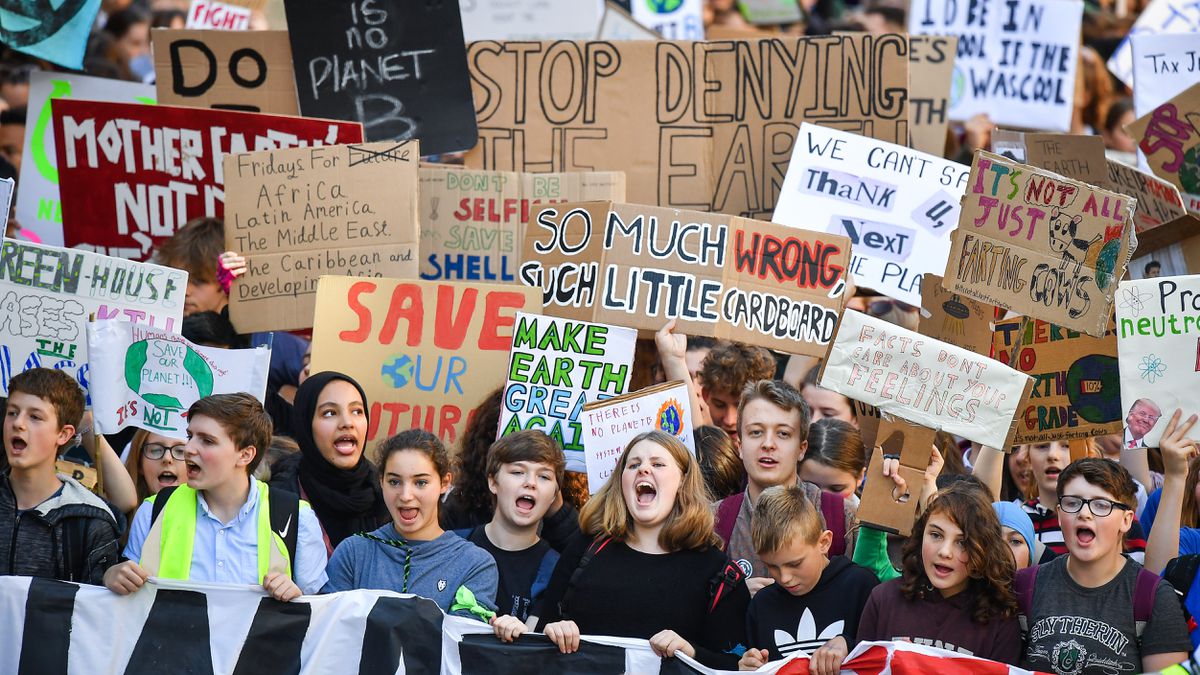

They’re moving on to greener pastures.
In a recent interview on Brian Williams’ podcast, “We’re Back” (an excellent Netflix show, by the way), Neil deGrasse Tyson talked about the downward trending of our country. He argued that we’re losing our preeminence the world, in large part because a number of our scientists have already left and even more are planning to do so because of funding cuts for research, fueled by the anti-education/intellectualism attitude of the current administration.
According to the White House Office of Personnel Management, more than 10,000 doctoral-trained experts in science left their jobs in 2025 after Trump took over. They represent 14% of the total number of Ph.D.’s in science, technology, engineering, math (STEM) and health fields. According to Science, departures at 14 research agencies outnumbered new hires last year by a ratio of 11 to 1.
Going further, a survey conducted in March 2025 of more than 1200 scientists, suggested that 75% are considering leaving the U.S. They were looking to move “Anywhere that supports science.”, with Europe and Canada among their top choices. This trend was particularly pronounced among those just starting out — of 690 postgraduate researchers, 548 were considering leaving, as are 255 of 340 PhD students.
Now, some may believe that we’re wasting our tax dollars on government funded research projects. Instead, we should let the private sector take care of our technological needs. Unfortunately, that’s not how the private sector operates — corporations don’t have the wherewithal, meaning the expertise and the funding, to develop the great ideas that have come along in the past 100 years. If corporations cannot foresee an immediate return on their investment, they won’t take on a new idea, hoping to make a profit. That’s where the federal government steps in, and more to the point, where the money to fund scientific research comes from.
What corporations are really good at is monetizing a discovery or an invention — adding GPS in your car for navigating, creating websites that make money via advertising on the internet, etc. They didn’t create GPS or the Internet, they use it make money once it’s developed by scientists who are funded by the federal government. The technology for Google maps wasn’t developed by Google, and weather forecasting companies (e.g., Accuweather) rely entirely on the National Weather Service (NWS), a federal agency, for their predictions.
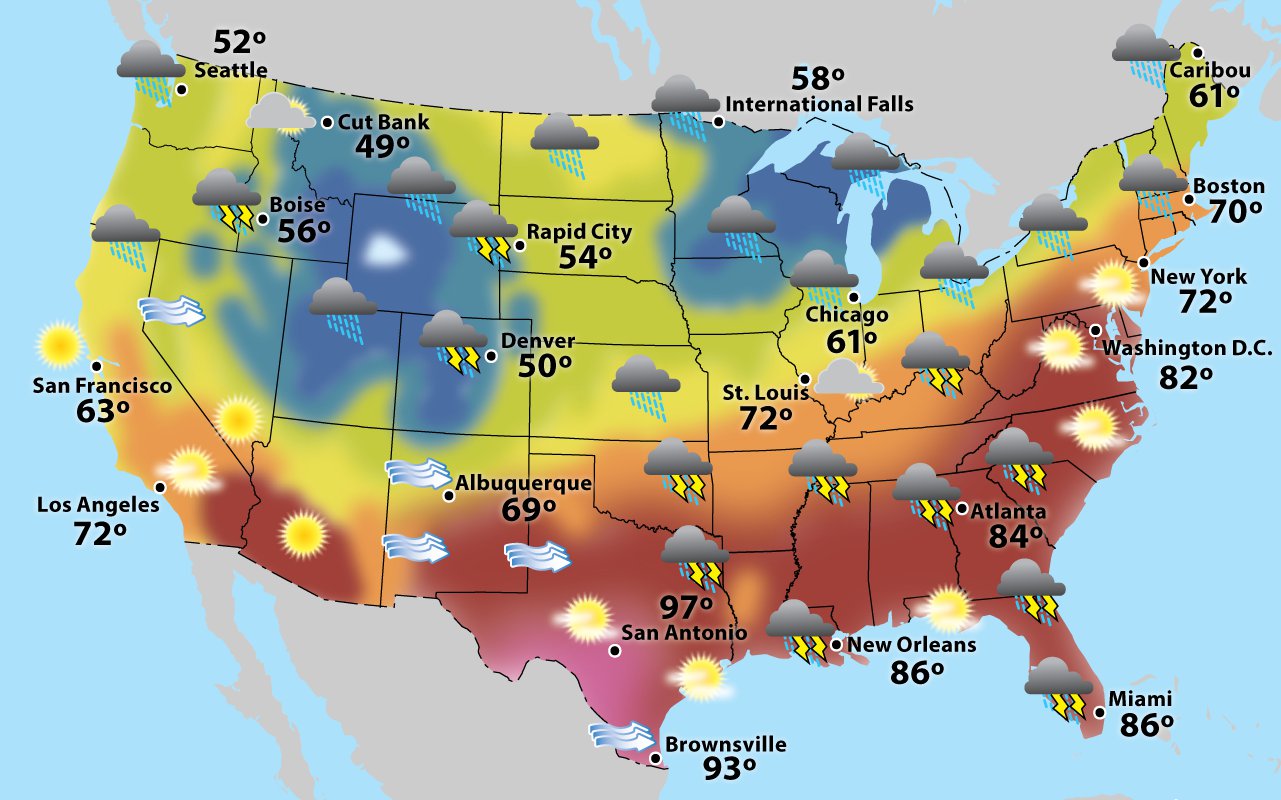
Not Invented by Accuweather
Here are a few other transformative innovations that came out of your tax dollars, some of which we might have assumed were developed by the private sector: radar, touchscreens, MRI’s, microchips, LED lights, supercomputers, autonomous robots, barcodes, seismic imaging, computer simulation software, genetic tracing, smart phones, microchips, modern Goodyear tires, enriched infant formula, lactose free milk, prosthetics, self-driving cars, and on and on.
This is not the first time conservative politicians had tried to block scientific progress. Think back to Reagan and HIV/AIDS research — it was slow and underfunded because he was reluctant to deal with a disease tied to the gay community. It wasn’t until the death of Rock Hudson did he make any kind of move, but that delayed development of treatments that cost thousands of lives. And then there’s George Bush Jr., who restricted funding of stem cell research, giving other countries a chance to compete in an industry we should have owned outright. In 2009, the Obama administration ended the 2001 funding restrictions, helping the U.S. regain momentum in that field.
So, what’s the rationale for the anti-science/anti-education position of conservatives? Some argue that it’s in line with their lack of trust in government, or possibly to some mis-guided perspectives on morality, or more simply, an attempt to limit the prestige of the educated class and consolidate power among the far right. But whatever the reason, it’s disguised by their claim that they’re trying to reduce costs and restore the “gold standard” for science.
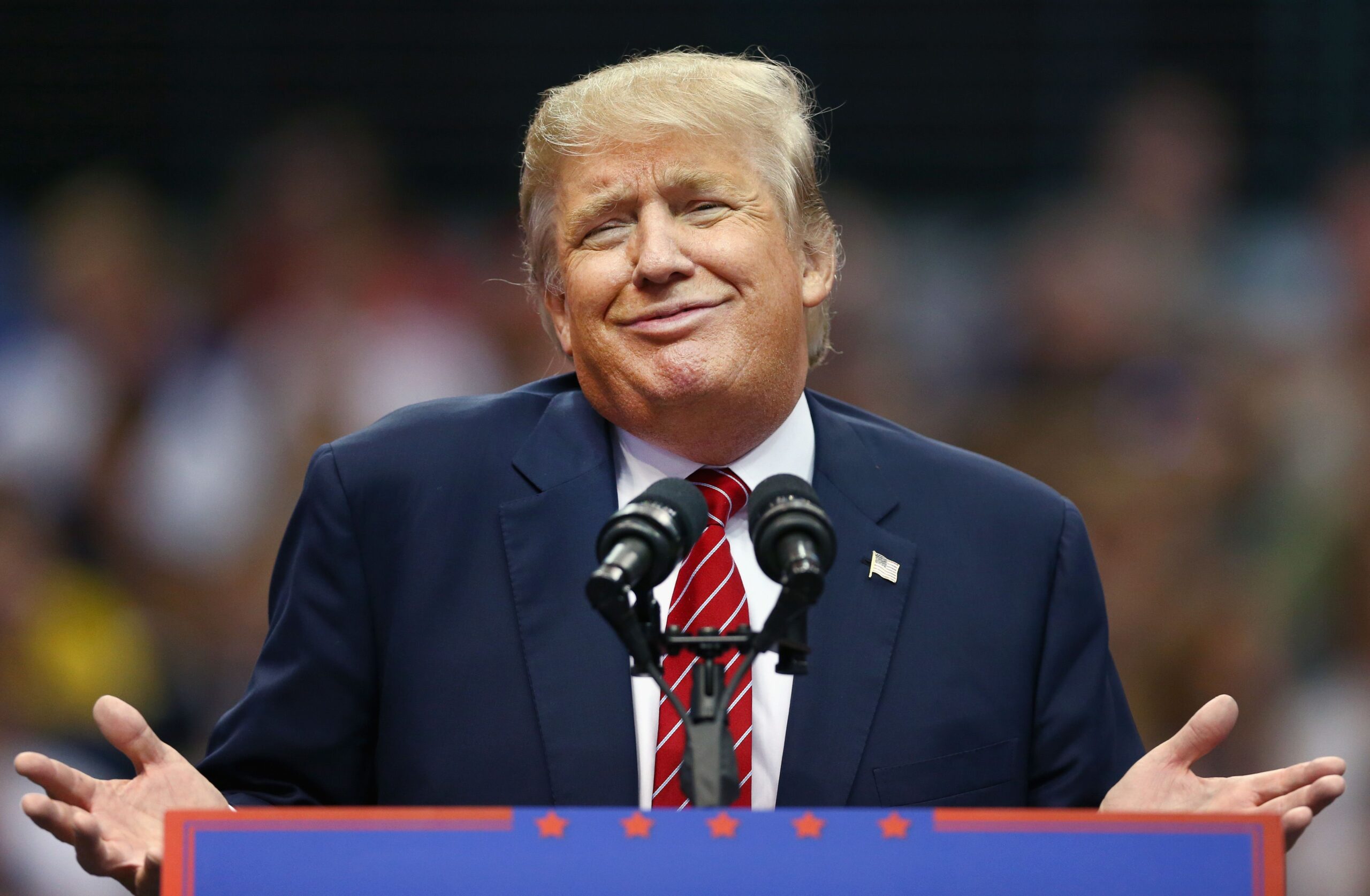
Do you trust this guy?
They also argue that this is the best way to ensure accountability for research spending. For sure, accountability and transparency are essential — we have a right to know how our money is being spent. But who’s more effective at overseeing science projects, scientists themselves or the brain trust that currently occupies the White House? Scientists are held to a standard that’s safeguarded by the peer review process. As a social scientist, I can tell you that scientists are competitive with each other, and there’s no way they will give a pass on research that does not meet the highest standards of reliability and validity — that’s not a brush they want to be painted with.
Politicians, on the other hand, look for science to align itself with a political agenda rather than an objective assessment of a study’s value. The end result will be to reinforce the ideals of those in power rather than come up with new treatments and technologies that benefit the rest of us. And by forcing the next generation of researchers to rethink their commitment to their fields, we have cut the free-flow of ideas, weakened the workforce, and slowed the scientific process down.
Many pundits believe that, eventually, we will renew our nation’s commitment to science — people will want new inventions, discoveries, and cures. And once again, we will become the dominant source of creativity we have been in the past.
But probably not before some very painful lessons have been learned.